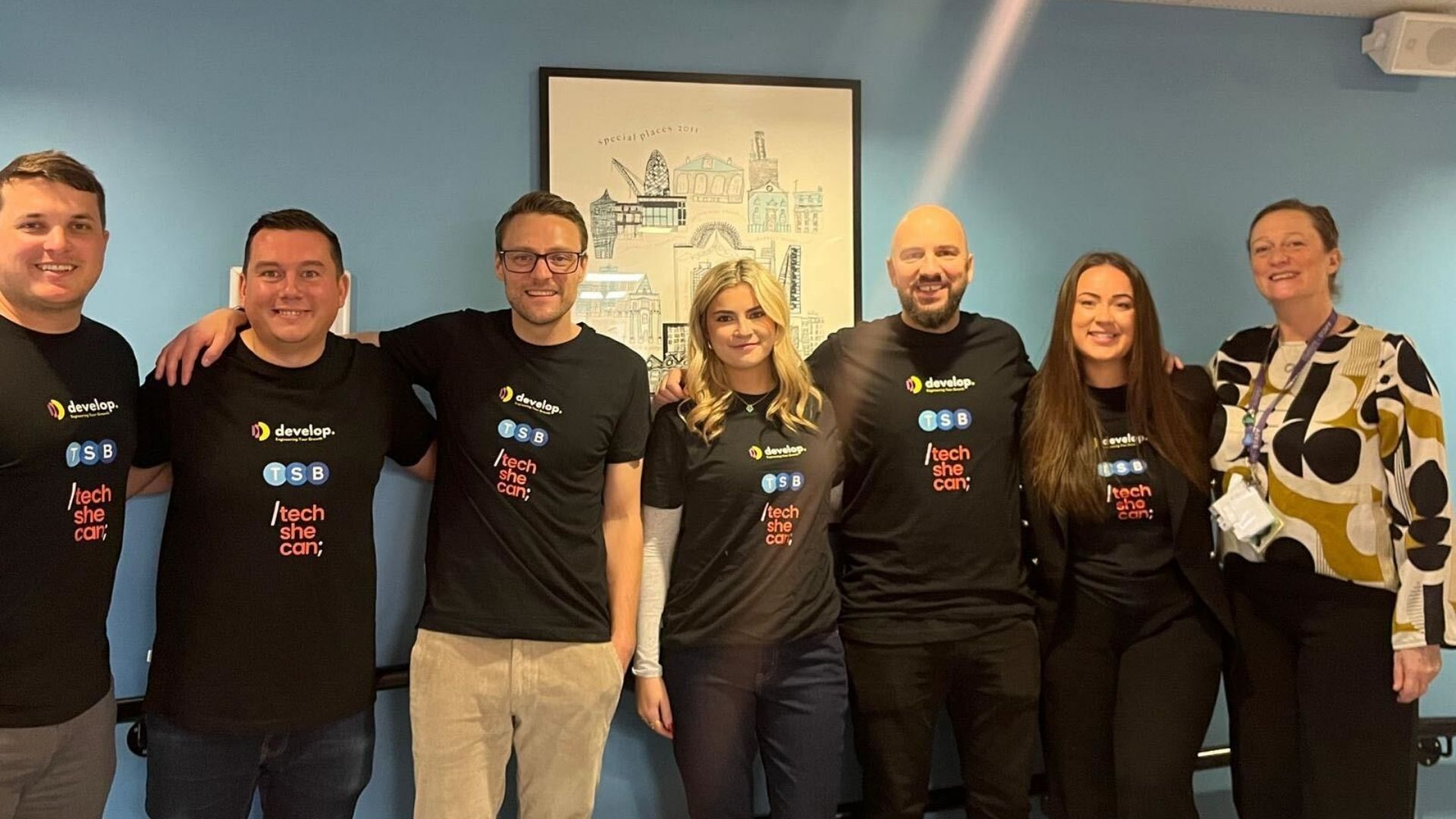
When we talk about the future of tech, outr minds jump to innovation, AI, and the skills gap. But at develop, we’ve learned that one of the most powerful indicators of the future of tech talent doesn’t come from industry forecasts or market reports.
It comes from primary schools.
Yes, the classroom filled with 7- to 11-year-olds who are just beginning to discover who they are and what they can be.
Through our ongoing partnership with Tech She Can, Canon Barnett Primary School and forward-thinking companies like TSB, we’ve had afront-row seat to the impact early education can have on building a more inclusive, dynamic, and sustainable tech industry.
Here’s what we’ve learned; and why your company should be paying attention.
Inspiration Starts Early
The Tech talent gap isn’t just about skill. It’s about visibility and belief.
Many children, especially girls, rule out careers in technology before they even leave primary school. Why? Because they don’t see people who look like them in those roles. Because they don’t think they’re “tech enough”. Or because no one has ever shown them what’s possible.
That’s where organisations like Tech She Can come in. As a UK-based charity, they work with schools, employers, and policymakers to tackle the gender gap in tech, starting in the classroom.
Through our partnership with Tech She Can, we’ve helped bring their mission to life in a hands-on practical way. We’ve co-delivered workshops that show young girls (and boys) what a career in tech can look like, and more importantly, that it could look like them.
Real Role Models Matter
One of our proudest collaborations has been with Cannon Barnet Primary School. Over the past year, we’ve worked directly with students and staff to deliver a series of engaging, age-appropriate workshops that explore careers in technology.
We don’t send in leaflets. We send in people.
Our own consultants, many of whom have come from non-traditional backgrounds, take part in these sessions, sharing their stories, answering questions, and giving students the kind of exposure to real-life role models that that makes tech feel tangible and accessible.
We also donate £25 per placement to the school to the school to help fund STEM toys and learning resources, ensuring our involvement leaves a lasting, physical legacy in the classroom.
This isn’t about tick-box CSR. It’s about consistent, visible support that makes an actual difference.
Cross-Industry Collaboration Drives Change
We believe long-term impact comes from working together.
That’s why we brought in one of our key clients, TSB, to co-deliver a full-day workshop at Canon Barnett alongside Tech She Can.
The result? A dynamic, high-impact event that gave students access to female tech leaders from TSB, who shared their career journeys, challenges, and insights, and showed that not all tech jobs require a STEM degree or a coding background.
One of the most popular segments was: ‘Tech Jobs for Non-Techies’.
This session helped students understand that curiosity, communication, creativity, and collaboration are just as valuable in tech as technical know-how. It opened their eyes to a wider range of career possibilities and helped break down the barriers that often discourage young people from pursuing a path in technology.
This Isn’t Charity. It’s Strategy.
We often hear business ask: “What does this kind of work mean for us as an employer?”
Here’s the answer: everything.
Supporting early tech education isn’t just about good ethics, it’s smart business.
When you invest in the future of tech talent:
- You gain early access to the next generation of diverse, motivated candidates.
- You build brand equity with candidates who want to work for companies that share their values.
- You show your commitment to long-term talent development, which attracts like-minded clients and partners.
In short: you don’t just look better on paper. You perform better in practice.
It’s About Shared Responsibility
At develop, we don’t believe that fixing the gender gap in tech is someone else’s job. We see it as a collective responsibility, and one that’s deeply connected to the recruitment process.
We are not just recruiter. We’re educators. Facilitators. Advocates.
We bring this mindset into every client partnership. And we’re proud to say that the companies’ we work with, like TSB, don’t just support this vision. They show up for it.
This is the synergy we strive for: shared values, aligned goals, and a genuine desire to shape the future in a way that’s inclusive, representative, and sustainable.
What You Can Do Next
If you’re a hiring manager, CTO, or people leader reading this…here’s our invitation:
Get involved.
Whether it’s joining us at a school workshop, offering your team as role models, or simply supporting the initiative through sponsorship or collaboration, you can be part of this journey.
We already know that diverse teams perform better, and that inclusive companies, attract strong talent. This is your chance to put that into action at the very start of the talent pipeline.
Because the tech industry of tomorrow is already sitting in classrooms today.
📞 Want to partner with us? Let’s talk.
If your organisation believes in bridging the gap and building a more diverse tech workforce, we’d love to work with you.
Join us, and let’s shape the future, together.
Phone: 020 7733 0430
Email: hannah@developrec.net

.png)
.png)
.png)
.png)
.jpg)
.png)